ARTE CONTEMPORANEA ED EVENTI CULTURALI
Swann Art Gallery
CONTATTI
Swann Art Gallery
+39 333 2455018
info@swannarte.com
Galleria d'Arte Contemporanea ed Eventi Culturali
“… La guardava; un frammento dell'affresco appariva nel viso e nel corpo di lei, e da quel momento cercò sempre di ritrovarvelo, sia che le fosse accanto o semplicemente pensasse a lei…” M. Proust
info@swannarte.com
+39 3332455018
Via Bertola 29, 10122 Torino
Via Bertola 29, 10122 Torino
Privacy Policy
Cookie Policy
©
MARIELLA BOGLIACINO
PERCORSI
a cura di Riccardo Dellaferrera
15/09/26 - 31/10/2026
Specht Residenzen
Torino, corso Palestro 5
The true challenge is the common good.
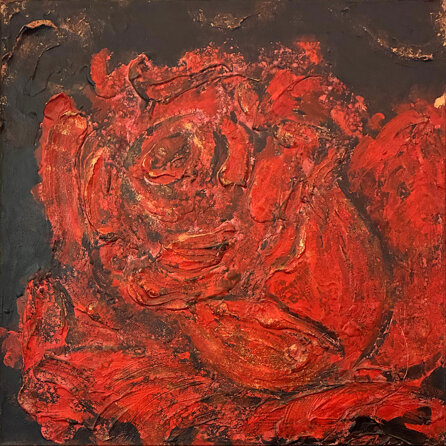
Mariella Bogliacino's artistic language is a resource for those who seek in art not only an aesthetic experience, but also a chance to question the present, to navigate its contradictions, and to safeguard, through their gaze, an ethical dimension of existence. Swann Art Gallery and Specht Residenzen present PERCORSI, an exhibition that brings together some of the key cycles of a research that, over the span of approximately forty years, has never ceased to engage with its own time. It is therefore not simply a matter of retracing a long artistic journey, but of recognizing, through works belonging to different periods and languages, the persistence of a question: how can the individual continue to be human within a society that seems to progressively lose its humanity? It is perhaps from this question that the subtitle of this presentation takes on meaning: the true challenge is the common good. Bogliacino's entire artistic career stems from a constant and rigorous study of the present, its social and political tensions, and its deepest contradictions. For her, historical time is not a neutral backdrop, but a living material to be traversed, reworked, and transformed. Wars, violence, injustice, inequality, environmental exploitation, and the progressive subordination of existence to economic logic are not taken as themes external to painting: they enter directly into her language and determine its necessity. This also gives rise to the urgency of a highly materialistic painting, often entrusted to mixed techniques, in which color, gesture, and sign become instruments of a knowledge that passes through the body and sensitivity even before abstract rationality. The pictorial material is pushed to the limits of traditional two-dimensionality, imbued with thickness, relief, ripples, and stratifications. Surface no longer seems sufficient: painting tends to become corporeal. And the body is precisely one of the fundamental loci of Bogliacino's research. A concrete, vulnerable, finite body, traversed by vital and destructive forces; a body that cannot be separated from the social and political dimension of existence. Matter is therefore not a purely formal choice: it is the point where thought is embodied, where reflection on the human condition becomes gesture, weight, resistance, wound. History and myth, and classical Greek culture in particular, constitute another essential tool in this journey. They are never taken as a nostalgic repertoire or as erudite quotation, but as still active forms through which to interrogate the present. Myth, in fact, allows us to transcend contingency without denying it, restoring an archetypal dimension to contemporary events. In the cycle dedicated to Aphrodite, and even more emblematically in The Belly of Aphrodite, myth becomes the symbolic space in which the tragedy of a humanity incapable of breaking its chains of hatred and violence is concentrated. The figure of the goddess of love and generation does not simply refer to beauty, but to the very possibility of life and its regeneration. The wounds of ancient history and those of contemporary history thus seem to coincide. In the Ferite cycle, this coincidence becomes physically perceptible: the surface is incised, lacerated, layered. The painting almost takes the form of a skin on which history has left its traces. Individual pain thus opens up to a collective dimension: what happens to others cannot be considered extraneous to our own existence. In the Vulcani cycle, however, the material of the earth—magma, molten matter, incandescent matter—becomes a metaphor for a primordial force that contains both the possibility of generation and that of destruction. Nature and humanity seem to belong to the same process here, while contemporary civilization appears increasingly incapable of recognizing the limits of its own claims to domination. It is from this perspective that Bogliacino's critique also addresses the contemporary economic and social model. The modern promise that individual well-being automatically equates to collective well-being seems to be definitively in crisis today. The interdependencies that characterize our time clearly demonstrate this: a health crisis can sweep across the planet in a matter of days; a financial crisis can spread instantaneously; a war can have energy and economic consequences on a global scale; climate change alters the relationship of entire populations with their surroundings; migratory flows are often the complex and intertwined outcome of all these conditions.
The individual can therefore no longer be thought of as a separate entity. Our freedom, our security, and even our very existence depend on systems of relationships that precede and encompass us. It is here that the notion of the common good takes on a radically ethical dimension. It does not simply mean what belongs to everyone, but what we are all mutually responsible for: peace, the air we breathe, the environment, the economic and social conditions that enable a dignified life, the possibility of generating and nurturing new lives, relationships with others and with guests, the construction of a sociality not founded on exclusion. Bogliacino's art, then, seems to suggest a reversal of perspective: we have built a society in which individual actions are considered the starting point, while the need to first build the collective context in which those individualities can truly express themselves is increasingly evident. It is in this sense that the term "Artivism," used by some critics to define his research, can be taken not as a simple label, but as an indication of a specific cultural position. Art does not simply represent the world: it can become a space of resistance, questioning, and responsibility. Not necessarily because it must provide solutions, but because it can change the way we look at what surrounds us and, above all, what we risk no longer seeing. The A-Mare series also seems to move in this direction. The "A," the first letter of the alphabet, takes on an original meaning: a beginning, a first movement, almost an inaugural gesture. But the logos that emerges from these works is not that of a reason that claims to dominate and classify reality. Rather, it is a reason that accepts engagement with sensitivity, memory, creativity, and the complexity of experience: the essence of art. A faith, perhaps stubborn, in the possibility that human intelligence need not necessarily translate into domination, but can become orientation. And precisely for this reason, Bogliacino's research, while constantly confronting the tragedy of the present, is not a defeatist pursuit. Traversing pain does not mean celebrating it or surrendering to it. It means acknowledging it in order to imagine transformation. The symbols that run through her cycles—Aphrodite, roses, doves, dolphins, the sea, the volcano—are not relics of a lost world. They remain possibilities. They are images through which an ancient culture continues to ask us fundamental questions: what does it mean to live together? What relationship can we establish with nature? What does it mean to generate, love, host, protect? And above all: what idea of humanity do we still want to defend? From this perspective, PERCORSI is not simply an anthological exhibition. It is a journey through Mariella Bogliacino's research and, simultaneously, an invitation to the viewer to embark on their own journey of awareness. From matter to the body, from the body to history, from history to collective responsibility, the works seem to construct a trajectory in which aesthetics can no longer be separated from ethics. The real challenge, then, is not simply understanding the world we live in. It is understanding that the world we share is also our responsibility. The real challenge is the common good.
Riccardo Dellaferrera, September 2026